
Hello there, barn rats!
It's me, Gabby Tabby, your favorite 11-year-old barn rat (the literal kind - whiskers, tail, and all!).
Have you ever watched a horse do something amazing and thought, "How did they teach them THAT?!"
Well, buckle up, because today I'm taking you on a journey through time to when horses weren't just working on farms or carrying soldiers - they were SUPERSTARS performing death-defying tricks under circus big tops!
Great Aunt Maxine told me this story one rainy afternoon when we couldn't ride. She pulled out her dusty history books and said, "Gabby, if you think dressage is fancy, wait until you hear what circus horses used to do!"
She was right. This story is WILD.
Horses Have Been Entertainers for THOUSANDS of Years
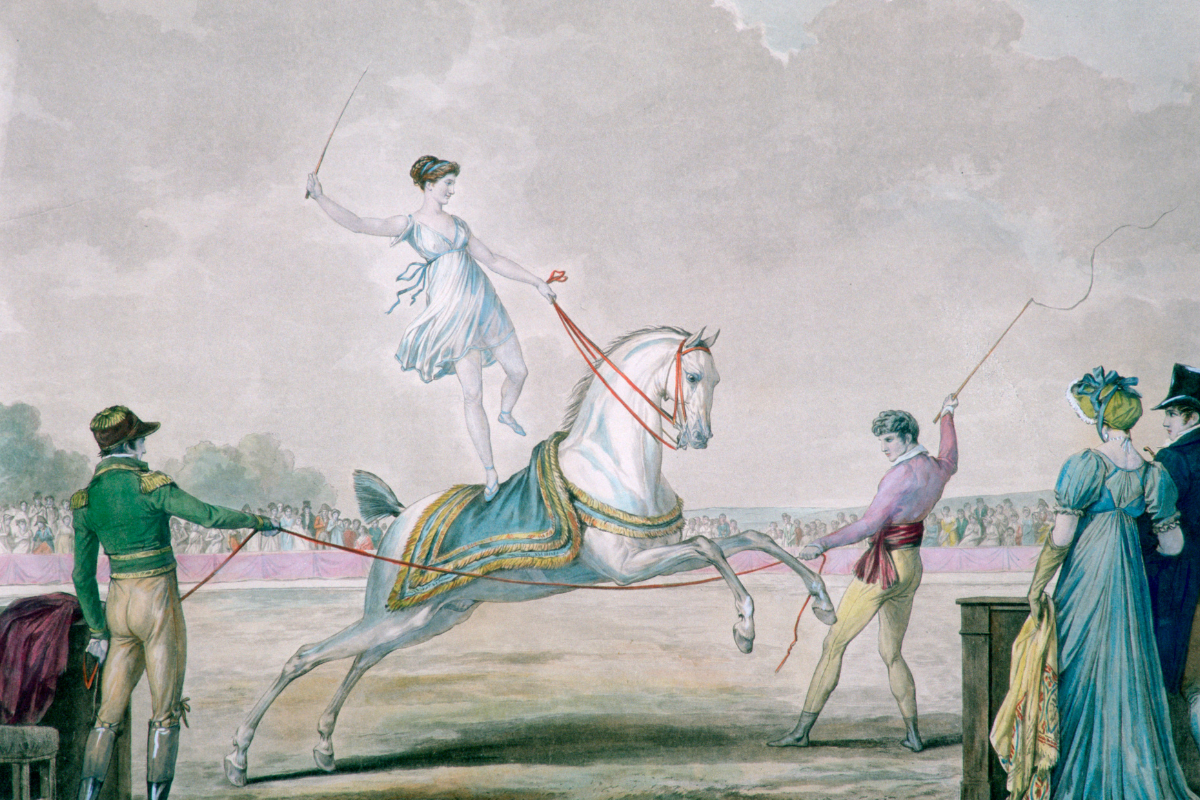
Okay, so I thought circuses started like 100 years ago. NOPE. Horses have been entertaining crowds for over 3,000 years!
Ancient Egypt (1300 BCE - that's 3,334 years ago!): Historians found proof that Egyptians trained horses to perform tricks for village festivals. These weren't just simple tricks either - we're talking coordinated movements that crowds would gather to watch.
Ancient Mexico (200 BCE - about 2,218 years ago): People in ancient Mexico also used horses in entertainment performances during celebrations.
Other ancient places got in on the action too:
Ancient China had festival horse performances
Greece included horses in their games and celebrations
Medieval Europe featured horses in royal entertainment
But here's the thing - all of these were just performances during festivals. Nobody had created a CIRCUS yet. That wouldn't happen until much later...
Great Aunt Maxine says: "Humans have always been amazed by horses. When you can train a 1,000-pound animal to dance, bow, or jump through fire, people will pay to see it!"
What Kind of Horses Were Circus Stars?
You might think circus horses were special breeds, but actually, it depended on what tricks they were performing!
Draft horses like Percherons were circus favorites because:
They have calm, steady personalities (important when crowds are screaming!)
Their backs are wide and strong (perfect for acrobats to stand on)
They're powerful enough to pull heavy circus wagons from town to town
They don't spook easily at loud noises and bright lights
Working breeds were also popular because:
They were strong enough to move all the circus equipment
They could handle long travel days
They were versatile - could perform AND work
Here's what blew my mind: these circus horses had THREE jobs!
Moving the circus - pulling wagons full of equipment from town to town
Performing in parades - touring through villages to get people excited about the show
Entertaining under the big top - doing their main performance for paying audiences
And here I am thinking my lesson horse has it tough doing two rides a day...
The Amazing Tricks Circus Horses Could Do
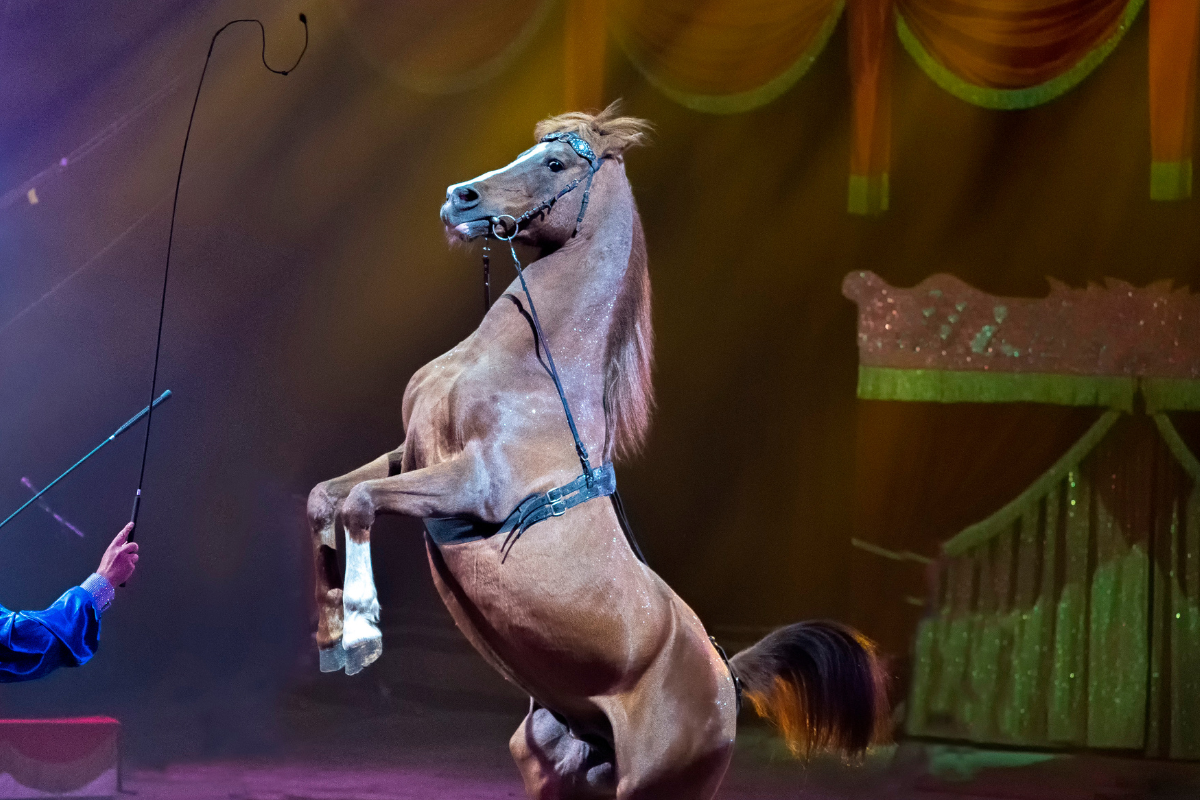
Before human acrobats were doing somersaults and cartwheels on horseback, the HORSES had their own incredible tricks!
Circus horses were trained to:
Lay down on command (and stay down while crowds walked past!)
Knock on a door with their hoof (like they were asking permission to enter!)
Nod "yes" or shake "no" to questions from their trainer
Fetch objects like a dog would
Unbuckle and remove their own saddle (I can barely get mine off!)
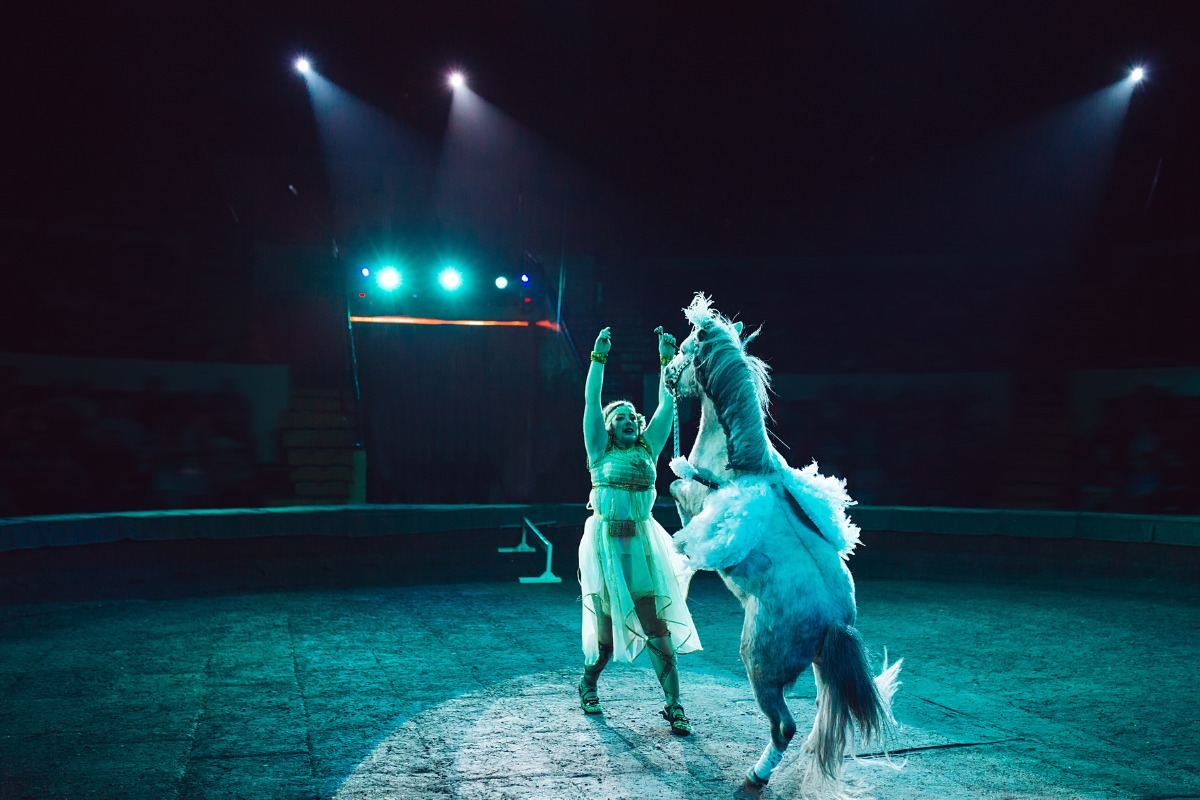
Walk on their hind legs for extended periods
"Spell" by pawing the ground to indicate letters (A, B, C...)
Count by stomping their hooves
Bow to the audience
Dance to music
SPELL?! I'm over here trying to teach my horse not to spook at plastic bags, and these circus trainers had horses pawing out the alphabet?!
Great Aunt Maxine says this requires incredible patience, consistency, and positive reinforcement - the same skills we use in modern horse training, just applied in creative ways.
The coolest part? Horses seemed to ENJOY performing these tricks once they learned them. They'd get excited when the music started and the crowds cheered!
How It All Began: The First Real Circus (1768)
Now we get to the guy who basically invented the circus as we know it: Philip Astley.
In 1768, Philip was a horse-loving guy who wanted to entertain people by doing tricks on horseback. But he kept running into a problem - his horses would run all over the place during performances, making it hard to control them and even harder for audiences to watch.
Then Philip had a lightbulb moment!
He discovered that horses are easier to control when they're moving in a circle.
This is actually true! It's the same reason we use round pens for training today. The circular motion helps horses focus and balance naturally.
So Philip invented the circus ring - a round arena that was exactly 42 feet in diameter.
Fun fact: This is the same size circus rings are STILL today! Philip got it right the first time.
Philip Solved Another Problem Too
You know how falling off your horse is nobody's idea of a good time? Philip Astley knew this too, especially since he was trying NEW tricks and falling off... a lot.
So he came up with a genius solution: cover the ground with dirt and sawdust!
This made the surface:
Softer for him when he fell (which he did. A lot.)
Better for his horse's hooves
Less slippery than hard-packed ground
Easier to see in the ring (the sawdust showed the circular pattern clearly)
Today we call this "arena footing," and it's still one of the most important parts of any riding arena!
Great Aunt Maxine says Philip Astley was basically the grandfather of modern arena design. Every time you ride in an arena with good footing, you can thank him!
The First Female Circus Star: Patty Astley
Here's where the story gets even cooler - Philip's wife Patty became the FIRST woman to perform acrobatics on horseback in the circus!
Before Patty, women weren't really "supposed" to do dangerous, athletic things in public. But Patty was like, "Watch this!" and changed everything.
When Philip died, their son John Astley took over the circus in 1788. John was known as "the horse dancer at full gallop" because he could perform tricks while his horse was running at full speed.
Can you imagine doing a handstand on a galloping horse?! I can barely stay balanced at a sitting trot!
The Franconi Brothers & The Panel Horsewomen
John Astley hired the Franconi brothers, who brought 20 horses with them to the circus.
Wait - TWENTY horses?! Can you imagine feeding and caring for that many?!
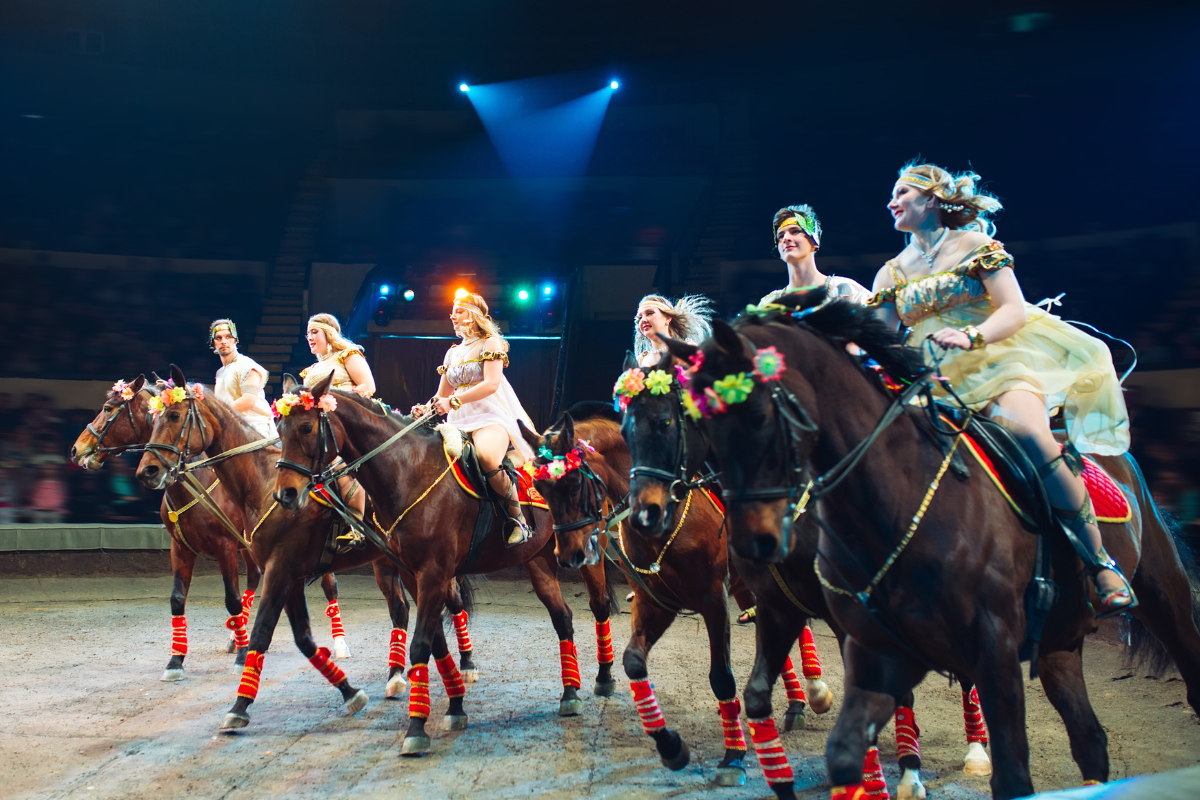
The Franconi brothers' wives became famous as panel horsewomen - and this is where it gets really interesting!
What panel horsewomen did:
Wore tutus or tunics (like ballerinas)
Balanced on a padded panel attached to the horse's back (not a saddle!)
Performed graceful dances while the horse moved
Used ribbons, hoops, and other props
Made it look EASY (even though it definitely wasn't!)
Audiences were amazed because these women looked dainty and feminine, but they were controlling powerful horses while doing complex choreography. They showed everyone that women could be strong, skilled, and graceful all at the same time.
Pretty cool, right?
Tricks Got More Daring Over Time
As more circuses opened around the world, performers competed to create the most exciting acts. The tricks got more and more adventurous!
1820: Bareback riding became the standard
Before this, most tricks were done on a saddle or padded panel. But performers discovered they could do even cooler moves without a saddle! This requires INCREDIBLE balance and core strength, by the way.
1825-1851: The golden age of daring circus tricks
Here's the crazy part - ALL of these tricks happened while the horse was galloping full-speed!
The Somersault Acrobats would flip through the air while their horse galloped beneath them, then land back on the horse. Sometimes they'd do MULTIPLE somersaults!
"The Jockey"
Riders would jump from kneeling to standing position on a galloping horse - over and over - making it look like they were "jockeying" for position.
Cossack-Style Acrobatics This is WILD. Riders used a special saddle with multiple handles and would:
Hang off the side of the horse
Go UNDER the horse while it was running
Jump over barriers (sometimes made of FIRE!)
Swing around the horse in different positions
"Buffalo Bill" Style Performers would shoot targets and lasso objects while riding at full gallop - like real Wild West cowboys!
I can barely post at the trot, and these people were doing backflips on galloping horses.
Horses Started Doing Fancy Dressage-Style Moves
Later, circus horses began performing more elegant, coordinated movements that showed off their flexibility and teamwork. These moves are actually what we see in dressage competitions today!
Circus horses performed:
Right-hand passages (elevated, bouncy trot)
Half-voltes (semicircular movements)
Pirouettes (turning in place on hind legs)
Waltzes (dancing to music in coordinated patterns)
Multiple horses would perform these movements together, perfectly synchronized to music. Imagine seeing 10 horses all doing the same fancy dance moves at the same time!
Great Aunt Maxine says modern dressage actually borrowed a lot from circus training. The FEI (international equestrian organization) studied circus horse training methods when developing dressage standards.
The Dark Side of Circus Life
Okay, barn rats. We need to talk about the not-so-magical part of this story.
While circus horses were doing amazing things, the way they were treated was often... really, really bad.
The harsh reality:
Living conditions were terrible (small, dirty stalls or no shelter at all)
Horses weren't fed properly or given enough water
They were overworked - performing multiple shows per day with no rest
Training methods often involved abuse and fear
Horses were punished harshly for making mistakes
When they got injured or too old to perform, they were often abandoned
This breaks my heart, honestly. These horses were doing incredible things, entertaining thousands of people, and earning lots of money for circus owners - but they weren't being cared for with love and respect.
Animal activists (heroes who fight for animal rights) started speaking up.
They said: "This isn't okay. Animals deserve better treatment, proper care, and to not be forced to perform when they're sick or injured."
The Fight to Protect Circus Animals
People who love animals (probably barn rats like us!) fought HARD to change how circus animals were treated.
Organizations like the RSPCA (Royal Society for the Prevention of Cruelty to Animals) documented the abuse and pushed for laws to protect animals.
In 2019, the Wild Animals in Circuses Act was passed in many countries, which banned the use of wild animals in circuses.
This was a HUGE victory for animal welfare!
Today:
Most modern circuses (like Cirque du Soleil) use only human performers
Laws protect animals from being forced to perform
When horses ARE used in entertainment, they must meet strict welfare standards
Horses performing in shows today are treated like athletes - with proper care, rest, veterinary attention, and retirement plans
But unfortunately, there are STILL some circuses in parts of the world that use animals without proper care. This is why animal welfare work is so important!
What We Can Learn from Circus Horse History
So, what does all this mean for us barn rats today?
The good things we learned:
Horses are incredibly intelligent and can learn complex behaviors
Positive reinforcement training works better than fear-based methods
Horses need proper footing and arena design for safety
Circular motion helps horses balance and focus (hello, round pens!)
Horses can be amazing partners in entertainment when treated well
The important lessons:
Animals deserve respect, proper care, and humane treatment - ALWAYS
Just because we CAN train an animal to do something doesn't mean we SHOULD
Entertainment is never worth animal suffering
We must speak up when we see animals being mistreated
Modern horse sports should prioritize the horse's welfare above human entertainment
Great Aunt Maxine says: "Those circus horses were incredibly talented, but they deserved so much better. Today, we know that happy, well-cared-for horses perform better anyway. Fear and abuse never create true partnership."
Modern Circus Acts Done Right
Today, there ARE still some horses in entertainment - but the good ones do it VERY differently!
Modern equestrian entertainment (when done ethically):
Horses are treated like professional athletes
They have excellent living conditions, proper nutrition, and veterinary care
Training uses positive reinforcement, not fear or punishment
Horses get rest days and aren't overworked
Retired horses have safe, comfortable homes
Welfare is monitored by independent organizations
Examples of ethical horse entertainment today:
Cavalia (theatrical horse show with high welfare standards)
Medieval Times (horses are cared for by professional staff)
Some liberty horse demonstrations at expos
Educational demonstrations at horse events
If you ever go to a show featuring horses, look for these signs that horses are being treated well:
Horses look healthy, with shiny coats and bright eyes
They seem willing and happy to perform (not fearful)
Handlers interact with them kindly and respectfully
The show discusses horse welfare and training methods
Horses have access to water and rest areas

Your Turn to Be a Horse Hero
Now that you know this history, YOU can be part of making sure horses are always treated with respect!
How you can help:
Never support circuses or shows that abuse animals
Speak up if you see a horse being mistreated
Learn about positive reinforcement training methods
Support organizations that fight for animal welfare
Educate others about ethical horse treatment
Choose to ride at barns that prioritize horse welfare
Every barn rat has the power to make a difference for horses!
The Legacy of Circus Horses
Circus horses taught us so much about what horses are capable of learning. They showed that horses are intelligent, athletic, and capable of incredible partnerships with humans.
But they also taught us that entertainment is never worth animal suffering.
Today, we can appreciate the amazing abilities of circus horses while also committing to treating ALL horses with the love, respect, and care they deserve.
Great Aunt Maxine puts it best: "Those circus horses were heroes in their own way. They showed the world how special horses are. Now it's our job to honor their legacy by treating every horse like the treasure they are."
What Do You Think?
I'd love to hear from you, fellow barn rats!
Were you surprised by how long horses have been entertainers?
What circus trick amazed you the most?
How do you make sure the horses you ride are treated well?
Have you ever seen horses perform in a show?
Leave a comment below and let's chat about it! And if you learned something new today, share this post with your horse-loving friends.
Until next time, remember:
Stay curious, stay brave, and stay barn-tastic!
Gabby Tabby 🐭💜
P.S. Great Aunt Maxine wants me to remind you: Every horse deserves to be treated with kindness, whether they're a backyard pony, a competition star, or a former circus performer. That's the barn rat promise!
Want to learn more horse history? Check out these posts:
Women Who Changed the Horse World
Famous Racehorses and Their Incredible Stories
The Real Story Behind Nightmare Horses
Love what you're reading? Join Barn Rats Club for exclusive stories, yoga videos, printables, and a community of horse-loving kids just like you! Only $10/month.
